

Many ecommerce store owners notice a frustrating pattern: category pages rise in rankings quickly but drop just as fast – often much faster than blog posts. While blogs continue to bring steady traffic over time, category pages seem to lose visibility without warning. This happens because search engines prioritize fresh, useful, and well-structured content. As a result, pages that fail to evolve often lose relevance. That’s where content decay in ecommerce SEO becomes a critical issue.
In this guide, you’ll learn why category pages decline faster, how content decay impacts your rankings, and most importantly, how to fix it.
What Is Content Decay in Ecommerce SEO?
Content decay in ecommerce SEO refers to the gradual decline in search rankings and traffic as a page becomes outdated, less relevant, or less competitive.
Typical Timeline of Ranking Decline
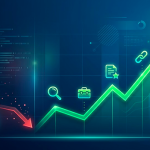
- 0–3 months: Strong rankings after optimization
- 3–6 months: Slight fluctuations
- 6–12 months: Noticeable decline without updates
- 12+ months: Significant drop in visibility
Why Ecommerce Pages Are More Vulnerable?
Unlike blogs, category pages depend heavily on product availability, trends, and internal linking. When these factors change, rankings often drop quickly.
Category Pages vs Blog Posts: Core SEO Differences
Intent Stability
- Blog posts target informational intent, which stays consistent over time
- Category pages target transactional intent, which shifts based on trends and demand
Content Depth
- Blogs evolve with updates, new insights, and added sections
- Category pages often remain static with minimal changes
Internal Link Equity
- Blogs naturally attract backlinks and shares
- Category pages rely mostly on internal links
These differences make content decay in ecommerce SEO more aggressive for category pages.
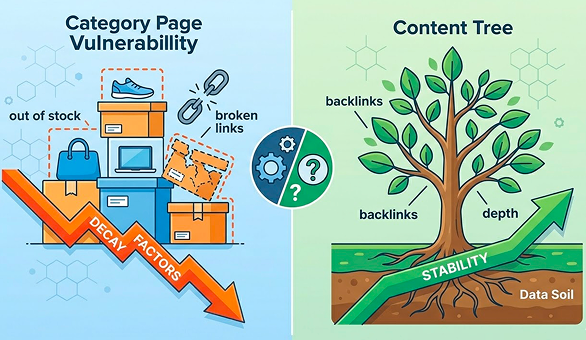
7 Reasons Category Pages Lose Rankings Faster
1. Thin or Duplicate Content
Most category pages contain very little original content. Many reuse manufacturer descriptions, making them less valuable in search results.
2. Dynamic Inventory Changes
Products frequently go out of stock or get replaced. As a result, relevance drops and rankings follow.
3. Poor Internal Linking
Category pages are often buried deep in site architecture, reducing their authority and crawl priority.
4. Weak Backlink Profile
Blogs naturally earn backlinks through valuable content, while category pages rarely attract external links.
Filters and sorting options can create multiple URL variations, which dilutes crawl budget and weakens SEO signals.
6. Search Intent Drift
Consumer preferences change quickly. What users search for today may not match your category page tomorrow.
7. Limited Content Updates
Unlike blogs, category pages are rarely refreshed. This directly accelerates content decay in ecommerce SEO.
Signs Your Category Page Is Experiencing SEO Decay
Watch for these warning signals:
- Sudden or gradual ranking drops
- Decrease in impressions in Google Search Console
- Lower click-through rates (CTR)
- Decline in organic conversions
These are clear indicators of content decay in ecommerce SEO.
How to Prevent Category Page SEO Decay?
Add Long-Form Category Content
Transform your category pages into valuable resources by including:
- Buying guides
- Product comparisons
- Usage tips
This helps combat content decay in ecommerce SEO effectively.
Implement Smart Internal Linking
- Link category pages from high-traffic blog posts
- Use keyword-rich anchor text
- Improve crawlability and authority flow
Refresh Metadata Regularly
Update:
- Title tags
- Meta descriptions
Keeping metadata fresh signals relevance to search engines.
Use Structured Data
Add:
- Product schema
- ItemList schema
This improves visibility and enhances search appearance.
Advanced Strategy: Turn Category Pages Into “Commerce Hubs”
Instead of treating category pages as simple product listings, turn them into content-rich hubs.
What to Include
- Educational content sections
- FAQ blocks
- Product guides
- Trend insights
This hybrid approach reduces content decay in ecommerce SEO and boosts long-term rankings.
Conclusion
Category pages don’t have to lose rankings faster than blogs. The key lies in consistent updates, better content, and smarter linking strategies.
By actively addressing content decay in ecommerce SEO, you can turn underperforming category pages into powerful traffic and conversion drivers.
Now is the right time to audit your category pages, refresh their content, and build a strategy that keeps them ranking strong.
FAQs
They lose rankings due to thin content, lack of updates, weak backlinks, and changing product relevance.
Ideally, every 3–6 months to prevent content decay in ecommerce SEO.
Yes, adding valuable, long-form content improves rankings and user engagement.
Blogs perform better for informational queries, but optimized category pages can dominate transactional searches.